Clinical Evidence

In early studies, patient clinical outcomes show test predictive accuracy at 80%.
Evidence is growing through multiple clinical research studies with major medical institutions throughout the United States.
Download Clinical Evidence Documents
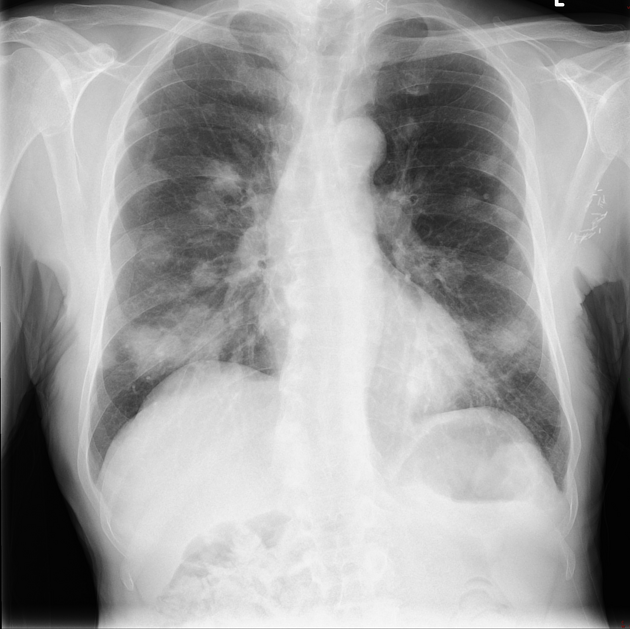
Lung cancer patient gets a new therapy option
Testing live cancer cells of a 77-year-old male with metastatic lung cancer reveals significant mass response to Carboplatin and Etoposide.
Patient Profile
No biomarker present, so the patient was limited to regular chemotherapy options.
RapidSelection Testing
Tumor cells were isolated from a malignant pleural effusion specimen. The test measured the mass response of the patient’s cancer cells to two cancer drugs, carboplatin and etoposide, and showed cells responded to both chemotherapies.
Results
Oncologist put the patient on a three-drug combination: carboplatin, etoposide, and the checkpoint inhibitor atezolizumab. Patient responded to the treatment, as indicated by the reduction of his pleural effusion.
Testing confirms response failure to genomic biomarker-directed therapy
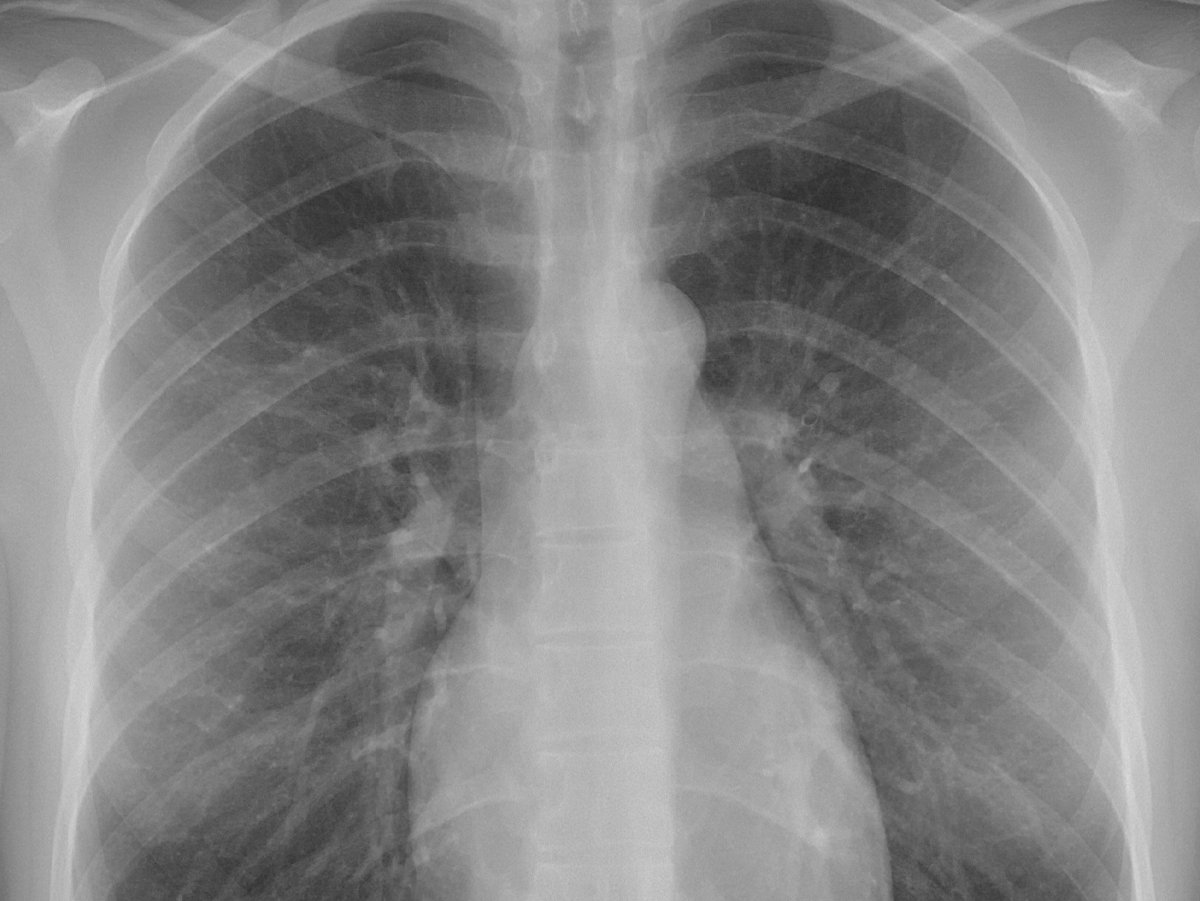
The RapidSelection test confirms the suspicion that metastatic non-small cell lung cancer with confirmed MET Exon 14 skipping mutation has stopped responding to Capmatinib.
Patient Profile
86-year-old woman with metastatic non-small cell lung cancer and confirmed MET Exon 14 skipping mutation. Matched to a targeted therapy (capmatinib) based on sequencing and the identification of a targeted mutation (in her MET gene). Oncologist started targeted therapy, initially with successful results. Therapy worked for approximately 9 months (Aug 2020 to March 2021). Oncologist suspected cancer was becoming resistant to capmatinib, based on her development of a malignant pleural effusion, and wanted confirmation.
RapidSelection Testing
Tumor cells were isolated from a malignant pleural effusion specimen. RapidSelection tested capmatinib against patient’s malignant cells.
Results
The RapidSelection test results confirmed the oncologist's suspicion that patient’s cancer cells were resistant to capmatinib.

Peer-Reviewed Papers

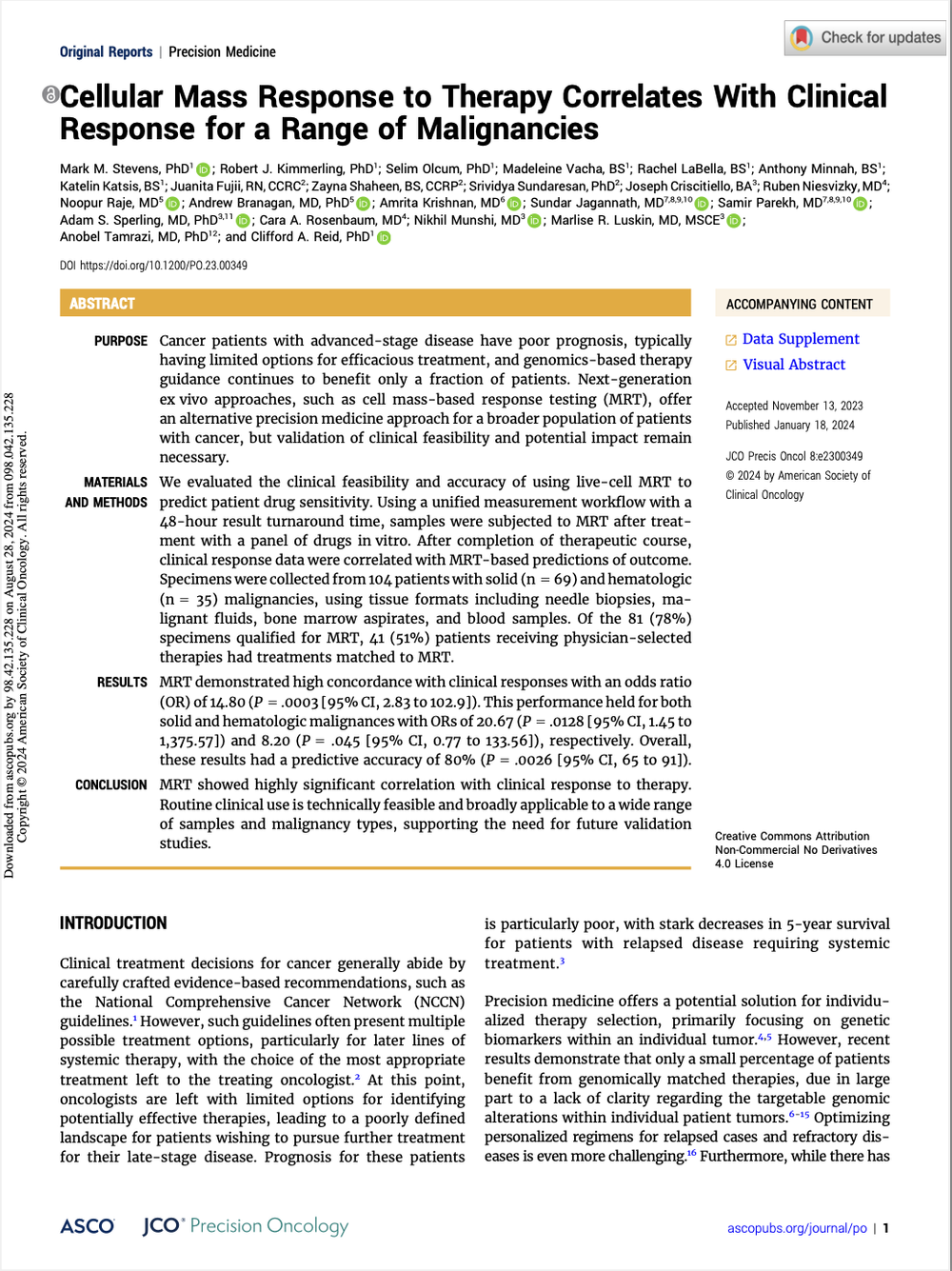
Cellular Mass Response to Therapy Correlates With Clinical Response for a Range of Malignancies
Cancer patients with advanced-stage disease have poor prognosis, typically having limited options for efficacious treatment, and genomics-based therapy guidance continues to benefit only a fraction of patients. Next-generation ex vivo approaches, such as cell mass-based response testing (MRT), offer an alternative precision medicine approach for a broader population of patients with cancer.

https://doi.org/10.1200/PO.23.00349
Read Paper
A pipeline for malignancy and therapy agnostic assessment of cancer drug response using cell mass measurements
Functional precision medicine offers a promising complement to genomics-based cancer therapy guidance by testing drug efficacy directly on a patient’s tumor cells. Here, we describe a workflow that utilizes single-cell mass measurements with inline brightfield imaging and machine-learning based image classification to broaden the clinical utility of such functional testing for cancer. Using these image-curated mass measurements, we characterize mass response signals for 60 different drugs with various mechanisms of action across twelve different cell types, demonstrating an improved ability to detect response for several slow acting drugs as compared with standard cell viability assays. Furthermore, we use this workflow to assess drug responses for various primary tumor specimen formats including blood, bone marrow, fine needle aspirates (FNA), and malignant fluids, all with reports generated within two days and with results consistent with patient clinical responses. The combination of high-resolution measurement, broad drug and malignancy applicability, and rapid return of results offered by this workflow suggests that it is well-suited to performing clinically relevant functional assessment of cancer drug response.

https://www.nature.com/articles/s42003-022-04270-3
Read Paper

Participating Institutions


The institutions involved in our clinical studies include:
Dana-Farber Cancer Institute in Boston, MA, is a world leader in adult and pediatric cancer treatment and research.
Massachusetts General Hospital is the original and largest teaching hospital of Harvard Medical School located in the West End neighborhood of Boston, MA.
The Icahn School of Medicine at Mount Sinai in New York City is an international leader in medical and scientific training, biomedical research, and patient care.
For over 100 years, Weill Cornell Medicine in New York City has been a community of world-class physicians, researchers and educators.
The VA Boston Medical Center is the major tertiary care center for the New England Region. It hosts a number of clinical centers of excellence.
City of Hope is a comprehensive cancer center in California. A national leader in advancing research and treatment protocols.